
Warning Signs Your Tree Needs to Be Removed: A Largo Homeowner's Checklist
Recognizing when a tree needs professional attention can protect your home and family before a problem becomes a crisis. Tree removal services are often the last resort, but for Largo, FL homeowners, spotting warning signs early makes all the difference. If you have concerns about a tree on your property, call Bay City Tree Service, Inc. at (727) 823-7140 for a free consultation before the situation becomes an emergency.
Why Largo's Climate Makes Tree Hazards More Likely
Largo's weather accelerates tree decline. Sandy coastal soils, salt air near the Gulf, and a hurricane season running from June through November can weaken even large, established trees. Common species like live oaks, laurel oaks, slash pines, and sabal palms are all susceptible to storm damage, disease, and root stress. Knowing what to look for gives you a head start.
Eight Warning Signs a Tree May Need to Come Down
A tree showing multiple warning signs at once may pose serious risk to your property. Work through this checklist for any tree you are concerned about.
1. Dead or Falling Branches in the Upper Canopy
Dead branches high in the canopy are one of the most visible red flags. If large limbs are bare while the rest of the tree leafs out normally, those branches may have died due to disease, pest activity, or root failure. Dead canopy wood can become a dangerous projectile during Largo's summer thunderstorms and hurricane-season winds.
2. A Noticeable Lean That Was Not Always There
A sudden or progressive lean is different from a tree's natural growth pattern. When a tree begins leaning toward a home, fence, driveway, or power line, it may indicate root failure or soil erosion. Sandy Pinellas County soils can shift quickly after heavy rain, sometimes destabilizing a root plate within a single storm event.
3. Fungal Growth at the Base or on the Trunk
Mushrooms, shelf fungi, or conk formations at the base or along the trunk are a strong indicator of internal decay. Fungi feed on dead and dying wood, meaning their presence signals rot that has already progressed well inside the tree. A trunk can be hollowed out while the outer bark still looks healthy, making the tree far more vulnerable to failure than it appears.
4. Cracks, Splits, or Cavities in the Trunk
Deep vertical cracks, co-dominant stems splitting at the union, or open cavities all point to structural weakness. A large cavity in the lower trunk may leave little structural wood to hold the tree upright under load. These issues are common in mature live oaks and laurel oaks throughout Largo after repeated storm seasons.
5. Root Heave or Disturbed Soil at the Base
Soil that is lifting, cracking, or bulging near the base of a tree often means the root system is shifting. Root heave can occur when a tree begins to tip due to root failure or when roots have been damaged by construction, driveway work, or repeated flooding. Once roots lose their anchor, the risk of the entire tree falling increases significantly.
6. Bark That Is Falling Off or Looks Abnormal
Sections of bark that are peeling, missing, or deeply discolored may indicate disease, pest infestation such as bark beetles, or a lightning strike. Lightning strikes are especially common in Florida and can travel down a trunk into the root system, causing damage that is not always obvious on the surface.
7. A Tree That Was Partially Uprooted or Storm-Damaged
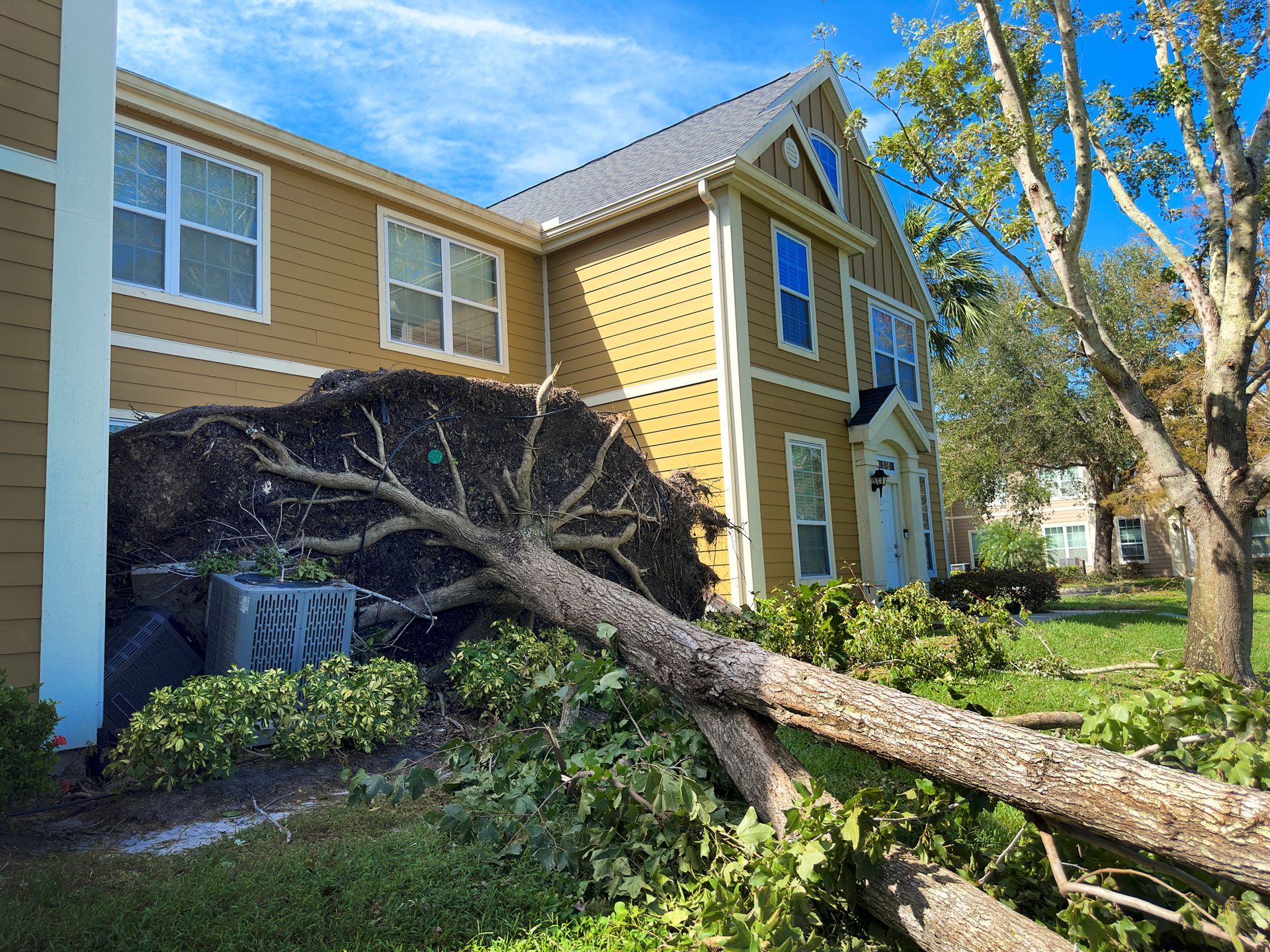
A tree that has partially uprooted, lost major limbs, or been struck by another tree during a storm may look stable but have compromised structural integrity. Leaning palms with split trunks or oaks with large exposed wounds often continue to deteriorate after storm events. In these situations, tree removal services are frequently the safest solution.
8. Dead Leaves That Cling Out of Season or Fail to Return
A deciduous tree that holds dead leaves out of season, or an evergreen that drops most of its foliage and does not recover by spring, may have died or entered severe decline. This flagging pattern can affect slash pines and other conifers in Largo's landscape after drought stress or pest damage.
What Should You Do if You Spot These Warning Signs?
A professional arborist assessment is the right first step. Homeowners in Largo, FL who need tree removal services should have a certified arborist evaluate the tree before making a removal decision. Some trees can be saved through pruning, cabling, or treatment. Others need to come down promptly. Waiting increases risk to your property and can raise the overall cost if a tree fails on its own.
Largo also has local tree ordinances that may require a permit before removing certain protected species or trees above a specified diameter. A qualified arborist can clarify what Pinellas County requires before work begins.
You can learn more about professional evaluation and tree removal services to understand what the process involves.
When Is It an Emergency?
If a tree is actively leaning toward your home, has already fallen on a structure, or is touching a power line, treat it as an emergency. Do not attempt to remove or cut any tree in contact with electrical lines. Call a professional immediately and keep family members away from the area until a certified arborist can assess the situation.
Get a Professional Tree Assessment in Largo, FL
Protecting your property starts with knowing when to call for help. Bay City Tree Service, Inc. provides professional tree removal services serving Largo, FL and surrounding Pinellas County communities. Their certified arborists can evaluate your trees, identify safety risks, and recommend the right course of action. Call (727) 823-7140 to request a free consultation, reach out online , or look up Bay City Tree Service, Inc. on Google Maps for business details and location information.